
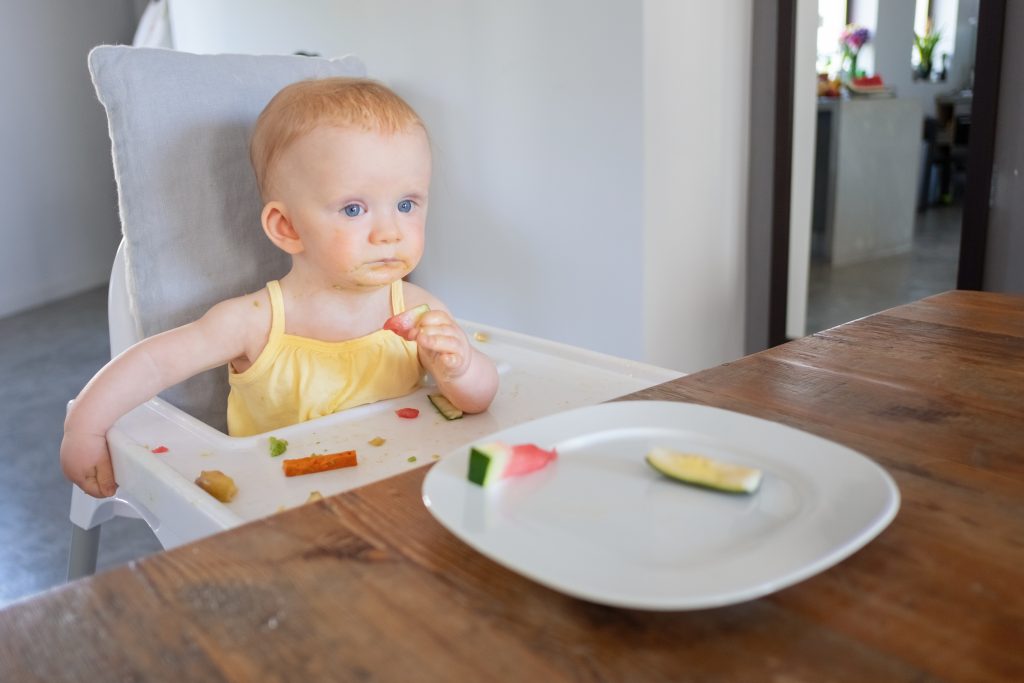
Introducing solids to your baby is a significant milestone. One approach gaining popularity among Singaporean parents is Baby-Led Weaning (BLW). This method allows babies to self-feed solid foods, promoting independence and healthy eating habits. Before adopting BLW, it’s crucial to understand its principles, benefits, potential drawbacks, and implementation strategies.
Contents
Understanding Baby-Led Weaning (BLW)
Baby-Led Weaning is an approach where babies skip puréed foods and are offered soft, manageable pieces of solid foods to self-feed from the start of weaning, typically around six months of age. This method encourages babies to explore food textures and flavors at their own pace, fostering autonomy and fine motor skills development.
In Singapore, health authorities recommend introducing solids at six months, aligning with the readiness signs for BLW. These signs include the ability to sit upright with minimal support, showing interest in food, and coordinating hand-to-mouth movements.
Benefits of Baby-Led Weaning
1. Promotes Healthy Eating Habits
By allowing babies to choose what and how much to eat, BLW can lead to better self-regulation of appetite and potentially reduce the risk of overeating.
2. Enhances Motor Skills
Self-feeding helps develop hand-eye coordination and fine motor skills as babies learn to grasp and manipulate different food items.
3. Encourages Family Mealtime Participation
BLW enables babies to join family meals, promoting social interaction and exposing them to a variety of foods and eating behaviors.

Potential Challenges of Baby-Led Weaning
1. Choking Risks
While studies suggest that BLW does not increase choking incidents compared to traditional weaning, it’s essential to offer age-appropriate, soft foods and supervise meals closely.
2. Nutritional Concerns
There’s a possibility that babies may not consume adequate nutrients, such as iron, if not offered a balanced variety of foods. Monitoring nutritional intake is vital.
3. Messiness
BLW can be messier than spoon-feeding, requiring patience and tolerance for food spills as babies learn to eat independently.
Implementing Baby-Led Weaning: Step-by-Step
Step 1: Ensure Readiness
Confirm that your baby is around six months old, can sit upright with minimal support, and shows interest in food.
Step 2: Prepare Safe Foods
Offer soft, easily graspable foods cut into appropriate sizes, such as:
- Steamed carrot sticks
- Slices of ripe banana
- Soft-cooked broccoli florets
- Strips of tender chicken
Avoid hard, small, or round foods that pose choking hazards.
Step 3: Maintain Supervision
Always supervise your baby during meals to ensure safety and provide support as needed.
Step 4: Introduce New Foods Gradually
Introduce one new food at a time and observe for any allergic reactions or sensitivities.
Step 5: Continue Breastfeeding or Formula
Breast milk or formula should remain the primary source of nutrition until the baby is one year old, complementing the solids introduced.
Read More : 10 Complementary Feeding Recipes for 1-Year-Olds to Overcome Food Refusal
Foods to Include and Avoid in BLW
Recommended Foods
- Soft fruits like papaya and mango
- Steamed vegetables such as pumpkin and sweet potato
- Protein sources like tofu and well-cooked fish (ensure bones are removed)
- Iron-fortified cereals
Foods to Avoid
- Hard nuts and seeds
- Whole grapes and cherry tomatoes (unless cut into small pieces)
- Foods high in salt or sugar
- Honey (not recommended for babies under one year)
Enhancing Nutrition with Ikan Bilis Powder
Incorporating ikan bilis (anchovy) powder into your baby’s meals can boost calcium and protein intake. Sprinkling a small amount over porridge or vegetables adds flavor and nutritional value, aligning with local dietary practices.
Conclusion
Baby-Led Weaning offers a hands-on approach to introducing solids, promoting independence and healthy eating habits. By understanding the method’s principles and ensuring safety and nutritional adequacy, Singaporean parents can effectively implement BLW to support their baby’s development.

Sources:
- https://www.healthhub.sg/live-healthy/baby-getting-ready-for-solids
- https://www.parkwayeast.com.sg/health-plus/article/baby-led-weaning
- https://www.healthychildren.org/English/ages-stages/baby/feeding-nutrition/Pages/baby-led-weaning-is-it-safe.aspx
- https://www.sassymamasg.com/guide-baby-led-weaning-pros-cons/
- https://www.healthline.com/nutrition/baby-led-weaning
- https://www.nct.org.uk/information/baby-toddler/feeding-your-baby-or-toddler/baby-led-weaning-pros-and-cons
- https://www.singhealth.com.sg/patient-care/patient-education/early-childhood-nutrition
- https://solidstarts.com/baby-led-weaning/
- https://www.parents.com/baby/feeding/solid-foods/dos-and-donts-of-baby-led-weaning/
- https://www.mountelizabeth.com.sg/health-plus/article/baby-weaning-guide